
Suffolk Previous Residents Sources
For Suffolk previous residents, use a source that matches the era and question. A current assessment parcel supplies the tax map, account, situs address, and owner of record. A recorded deed supplies a transfer link. Historical directories add a dated household lead, while Sanborn sheets add building and block context. The City of Suffolk is independent, so older work often shifts into Nansemond County records rather than a present-day county office. A missing early entry needs a preservation note, not a conclusion that no person or transfer existed.
| Source | Era covered | Suffolk access point | What the record can establish |
|---|---|---|---|
| Assessment parcel and GIS | Current system; historic start not stated | Spatialest and City GIS | Tax map, account, situs, owner-of-record, mailing field, borough and zoning |
| Recorded deed index | Current SRA cutoff not located | Circuit Court Clerk or registered SRA | Grantor, grantee, instrument, date, book/page and image status when available |
| Nansemond general deed indexes | 1866–1904 | Library of Virginia microfilm guide | Earlier county-era party and deed references |
| Selected Nansemond deed books | 1899–1913 | Library of Virginia microfilm guide | Recorded deed-book trail for the listed run |
| Virginia city directories | Selection 1873–1960 | LVA and Suffolk Public Library | Dated address association, subject to the printed volume |
| Sanborn fire-insurance maps | Selected named years, 1885–1965 | Library of Congress and local-history leads | Building footprint, use and block context |
Begin at the most recent parcel only when the question starts with a modern address. For a house already known from an old directory, begin with its printed year and street form, then work toward the deed or map record that can reconcile it. The Suffolk Real Estate Assessor and the City GIS program are the current parcel routes; neither record alone proves present occupancy.
Suffolk House History Sequence
A reproducible Suffolk house history keeps each record in order. Record the source agency, record date, access date, and the distinction between an index result and an image. The shortest useful flow is current parcel → purchase deed → seller or grantor → seller as earlier grantee → another purchase deed. Each pass moves the title trail backward rather than guessing from a surname. When the street number disappears in older records, retain the lot, subdivision, parcel, plat, or legal description as the stronger link.
- Locate the current parcel and save the tax-map or account number, situs address, subdivision, borough, zoning, and owner/mailing fields exactly as displayed.
- Use the current owner as the grantee on the purchase deed, then capture the deed date, grantor, grantee, book/page or instrument number, legal description, parcel reference, and image status.
- Read the seller, who is the grantor on that transfer. Search that seller as a grantee to find the earlier purchase that brought the property into the seller’s title.
- Repeat the grantor-to-earlier-grantee step, noting every changed street form, plat reference, subdivision name, and gap in the available index.
- Move to the clerk, Library of Virginia, or microfilm when the online record does not reach the needed era. Keep an absence marked as an unverified gap.
Save the evidence as a chain, not just a list of names. That habit keeps Suffolk previous residents separate from past owners and makes a later review possible.
Suffolk Previous Residents Deed Trail
The Virginia Secure Remote Access land-record system is a registered, local-clerk research route for Suffolk instruments and images. Its exact live labels are dynamic, so use the Clerk’s registration process rather than assuming a public form has a particular filter. A deed-index entry can identify the locality, grantor, grantee, document type, instrument and recording dates, book, page, instrument number, parcel or tax-map reference, consideration or remarks, and image availability when those fields are indexed. Not every document will show every field.
The Suffolk Circuit Court Clerk also provides the counter, phone, and detailed written-copy routes. SRA registration does not replace the Clerk’s copy procedure, and court records are not handled as ordinary Virginia FOIA requests. For a past-residents trail, the key record is the title connection, not an unsupported claim that the party lived at the property.
The official Suffolk Circuit Court Clerk page is the starting point for local land-record access and copy instructions.
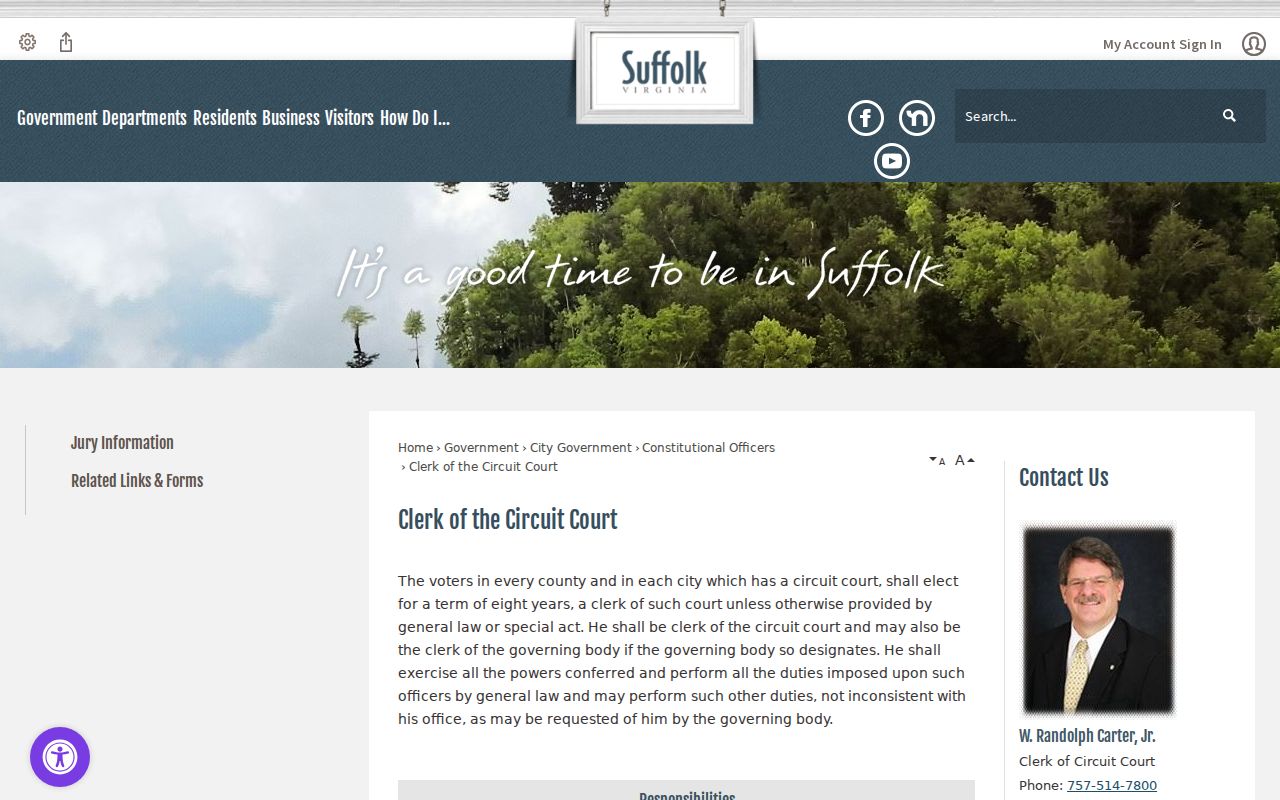
Use the Clerk route when an index result needs a copy, a page reference, or a source-date check before adding it to a Suffolk house history.
- Grantor and grantee
- The grantor transfers an interest; the grantee receives it. One deed party may become the other party in an earlier transfer.
- Chain of title
- A dated sequence of recorded transfers connecting one owner or interest to an earlier one.
- Legal description
- The lot, metes-and-bounds, subdivision, or plat description used in the land record. It can outlast a changed street number.
- Instrument
- The recorded document itself, often tracked by book/page or an instrument number and a record date.
Suffolk Past Residents and Nansemond
Older Suffolk previous residents research must use locality aliases. Search Suffolk, Nansemond County, City of Nansemond, Holland, and Whaleyville when the record date is historical. City of Nansemond existed from 1972 until the 1974 consolidation; the modern city also incorporates the former Suffolk, Nansemond County, Holland, and Whaleyville areas. An older deed, directory, court order, or marriage record may therefore use a locality that does not match a current parcel label.
The Library of Virginia Nansemond microfilm guide gives a firm bridge where the current system has no published historical cutoff. It identifies general deed indexes for 1866–1904 and selected deed books for 1899–1913, alongside plats and other county material. Ask for the cited reel or book when sending a focused request. The library can help locate the material, but access may require a repository visit, film order, or Clerk copy.
The Library of Virginia guide identifies the surviving microfilm runs instead of treating all county-era records as continuous.
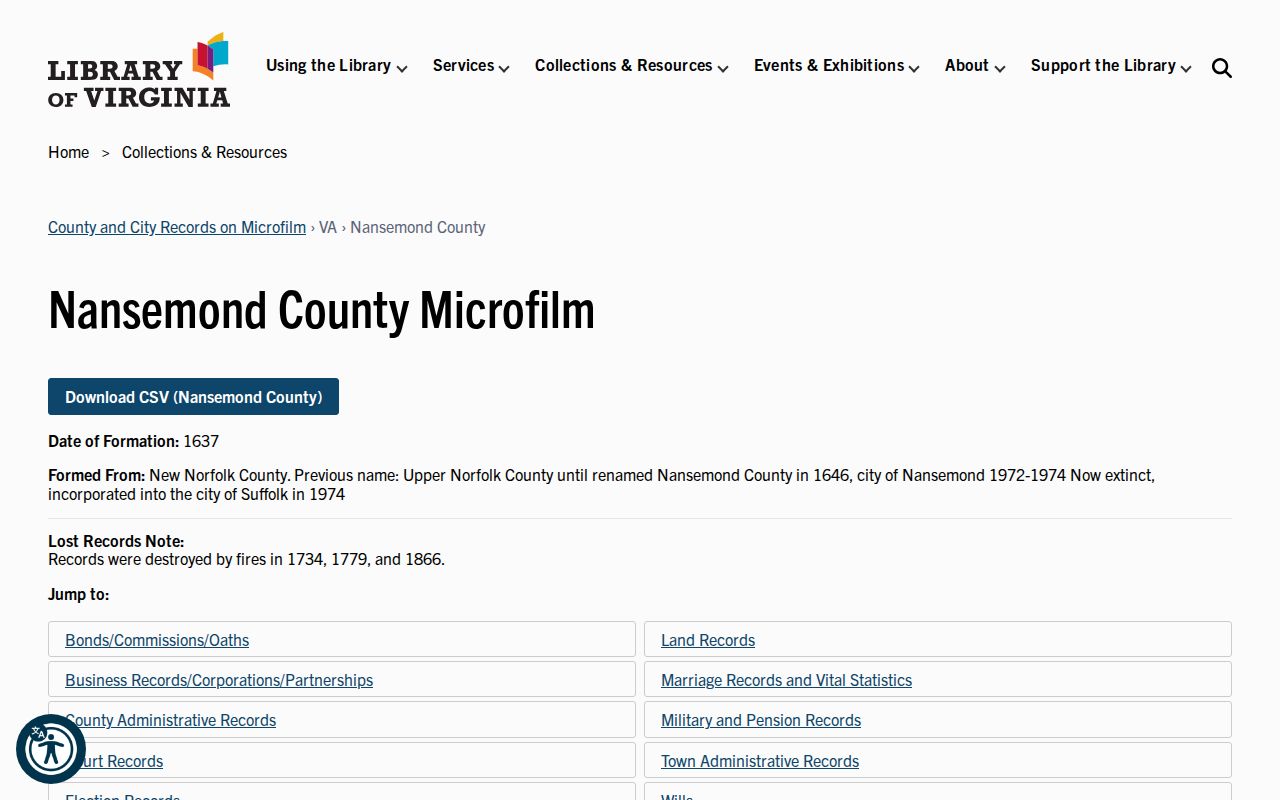
That distinction matters because the microfilm guide identifies a known run, while an unlisted period may remain a research gap.
Note: An early missing deed or probate entry may reflect destroyed, damaged, or unpreserved material rather than no transfer or household.
Suffolk Previous Residents Map Context
Sanborn sheets help test whether an old Suffolk address fits the right block and building context. The Historic District nomination names map years 1885, 1888, 1889, 1894, 1898, 1903, 1908, 1914, 1920, and 1965. The Library of Congress holds a January 1888 Suffolk item. Compare a directory year with a nearby Sanborn year, then describe only what the sheet supports, such as a footprint or use. It does not identify a current person.
Fire and jurisdiction history should stay beside the record trail. Fires in 1734, 1779, 1837, and 1866 damaged or destroyed local material; major business-district fires followed in 1885 and 1888. The 1837 fire destroyed the courthouse, clerk offices, jail, and more than 130 buildings. These events explain why a pre-1866 source may be absent. They do not prove that a family, property, or transfer never existed.
The City of Suffolk history provides the city’s official context for the later independent-city record trail.
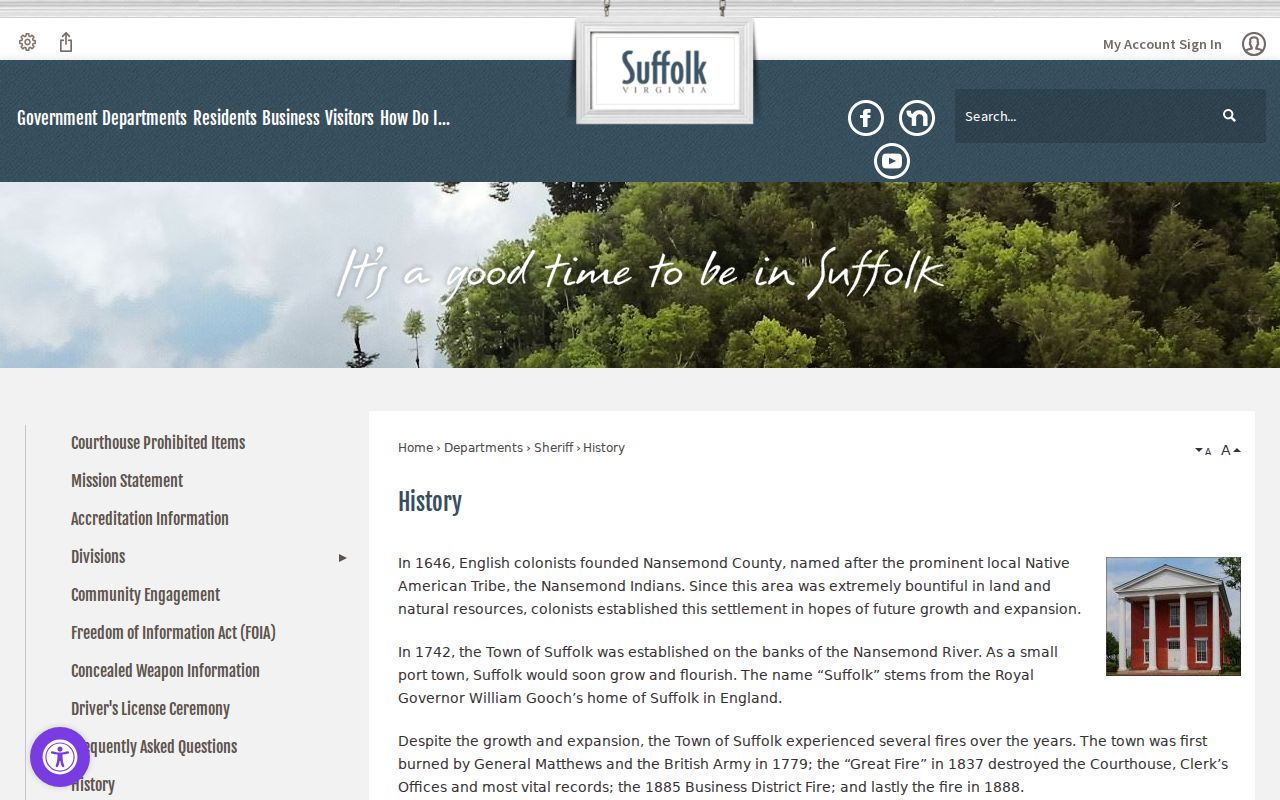
Pair that jurisdiction history with the record date so a modern Suffolk label is not forced onto an older Nansemond, Holland, or Whaleyville record.
Suffolk Previous Residents Households
Owners are only part of a Suffolk past-residents question. A directory or census schedule can show a household association for a defined date, including people who did not own the parcel. LVA describes a Virginia city-directory selection from 1873–1960. The Suffolk Historic District nomination verifies a 1930 City of Suffolk, Virginia directory and Hill’s Suffolk City Directory for 1957. Those are verified examples, not a promise that every year exists or that a reverse directory survives for a particular year.
For a directory entry, save the volume year and page, printed name, address, spouse notation, occupation or employer notation where printed, owner/renter mark, widow notation, and abbreviation key. Follow the sequence name index → full entry → street listing → reverse or criss-cross check when one exists → next available directory year → released census schedule. The historical collections themselves are described in the Suffolk Directory Book.
A newspaper or obituary can close an older trail, but cite the newspaper title, issue date, page, and stable item link. Suffolk Public Library staff can provide up to four hours of specific local-history research for targeted questions involving directories, obituaries, newspapers, and related materials. Broad all-family research is outside that service.
Note: A historical directory entry is a dated printed lead, never a present-day statement about who lives at an address.
Suffolk Past Residents Record Notes
Use a short research log for every Suffolk previous residents result: source agency, record type, locality label, record date, access date, address form, tax map or parcel where relevant, book/page or instrument number, image status, and an exact note about what the record actually says. If the record is only a search index, say so. If its image is available, record that status without claiming the image was reviewed when it was not.
Keep historical occupancy, ownership, tax mailing, and current residence as separate labels. A mailing address may differ from the parcel situs, and a historical person associated with a street is not automatically a later household member. For a current address-specific chain rather than a backward history, the Suffolk Street Directory follows the modern address route.
Lawful house history. Use Suffolk past-residents records for family history, estate questions, and property research. Using a historical trail to track or harass a living person can violate Virginia’s anti-stalking law.
Suffolk Previous Residents Index Access
The SRA land-record index is useful only when its result is tied back to the parcel and deed sequence. Registration, controlled public-use terms, and dynamic presentation are part of the access record. Record the access route along with the instrument result, then use a Clerk copy request when the history needs a verified document or a page that the system does not expose.
The Virginia SRA land-record index is the official online entry point for that registered search route.
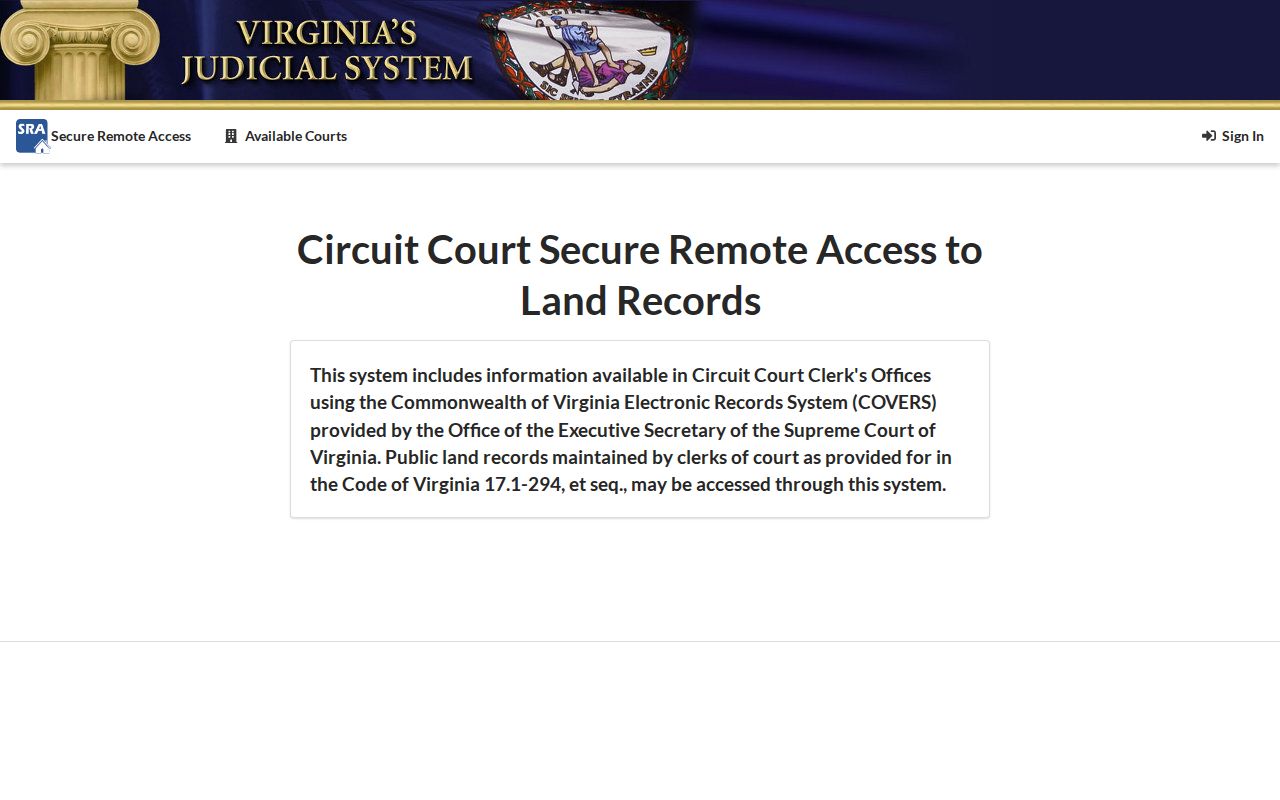
Its value in a Suffolk previous residents search is the documented deed connection, not a standalone name match.